
Promoters' ownership in private listed companies declined to an eight-year low of 40.58 per cent as of June 30, 2025, following a net share sale worth Rs 54,732 crore during the quarter, according to data from primeinfobase.com, an initiative of PRIME Database Group.
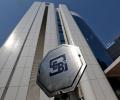
The Securities and Exchange Board of India (Sebi) has identified around Rs 77,800 crore as "difficult-to-recover" or DTR dues in its annual report for 2024-25 (FY26), marking a nearly 2 per cent increase from the previous year. These dues remain unrecovered despite exhaustive recovery efforts.

In all this, the political establishment -- and especially the finance ministry -- appears the weakest link, and worse still, the possible reason for the political backing to Narain and Ramkrishna that emboldened them to defy all the sentinels -- the independent board, the auditors, top management persons like the chief compliance officer, the company secretary, and unbelievably the super-regulator Sebi, observes V Ranganathan.

Stocks of brokerages and market infrastructure institutions (MIIs) witnessed selling pressure after the Securities and Exchange Board of India's (Sebi's) crackdown on proprietary trading firm Jane Street. The weakness was attributed to concerns that debarment of the US firm - a prominent player in the futures and options (F&O) segment - will lead to a further decline in volumes, which are already down over 30 per cent from the peak.

'Market momentum and investor interest are at unprecedented levels, making this the opportune moment.'
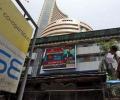
The stock exchange BSE has called off the merger of its unit at the Gujarat International Finance Tec-City International Financial Services Centre (GIFT IFSC), India International Exchange (India INX), with NSE International Exchange (NSE IX), a similar unit floated by rival National Stock Exchange (NSE), according to sources familiar with the development. BSE and NSE had been in discussions for the merger for over a year, but it has yielded no results, they said.
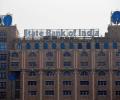
Country's largest lender State Bank of India (SBI) is looking to be among 10 top global banks in market capitalisation terms in the next five years, chairman CS Setty said on Wednesday. "The scope for value creation for the stakeholders is potentially very high. So the larger ambition is if the market supports whether we can be part of the top 10 global banks in terms of the market capitalisation (five years)," he said after listing of shares issued under Qualified Institutional Placement (QIP) at NSE.

The CBI on Friday questioned former CEO of National Stock Exchange (NSE) Chitra Ramkrishna in view of fresh facts emerging in connection with its ongoing probe into the alleged abuse of co-location facility in the NSE, officials said. The agency has also opened look out circulars against Ramkrishna, another former CEO Ravi Narain and former COO Anand Subramanian to prevent them from leaving the country. The central probe agency had booked a owner and promoter of Delhi-based OPG Securities Pvt. Ltd, Sanjay Gupta and other in connection with alleged abuse of NSE co-location facility to make gains by getting early access to the stock market, they said.

National Stock Exchange (NSE) chief Ashishkumar Chauhan on Friday cautioned retail investors against trading in derivatives and suggested them to invest in equities through mutual fund route. He emphasized that trading in Futures & Options (F&O) derivatives should be limited to informed investors who can manage risk and comprehend the market. Recently, Finance Minister Nirmala Sitharaman and chief economic advisor V Anantha Nageswaran flagged the growing risk of F&O trading for retail investors.

Sebi's probe against Jane Street is part of its efforts to mitigate losses for individual derivative traders.

From the Sensex firms, Bajaj Finance, Infosys, Hindustan Unilever, ICICI Bank, HCL Tech, UltraTech Cement, Bajaj Finserv, State Bank of India, Tata Consultancy Services, Reliance Industries, Axis Bank and Larsen & Toubro were among the major gainers. However, Trent, Tata Steel, Tech Mahindra and Maruti were among the laggards.

Markets regulator Sebi has barred US-based Jane Street Group from the securities markets and directed the group to disgorge unlawful gains of Rs 4,843 crore for allegedly manipulating stock indices through positions taken in derivatives segment. This could be the highest disgorgement amount ever directed by the Securities and Exchange Board of India (Sebi).

The National Stock Exchange (NSE) has got into firefighting mode to control the reputational damage caused by the Securities and Exchange Board of India's (Sebi's) order against its former managing director and chief executive officer Chitra Ramkrishna and others. According to sources, the exchange's management over the past one week has met several key stakeholders, including officials in the finance ministry and Sebi, major shareholders, and trading members, trying to distance itself from the controversy. The exchange plans to hold more meetings in the coming week to ensure that trading volumes and confidence in the bourse don't get impacted, they added.
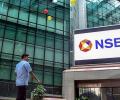
Capital markets regulator Sebi on Thursday sent a notice to NSE's former chief Ravi Narain, asking him to pay Rs 2.06 crore in a case related to governance lapses at the stock exchange, and warned of arrest and attachment of assets and bank accounts if he fails to make the payment within 15 days. The notice came after Narain failed to pay the fine imposed on him by SEBI (Securities and Exchange Board of India). The regulator, through an order passed on February 11, levied a fine of Rs 2 crore on Narain in the matter of governance issues over the appointment of the chief strategic officer at the stock exchange in 2013.

HCL Tech, Adani Ports, Eternal, Maruti, Reliance Industries and Asian Paints were among the gainers. HDFC Bank, ICICI Bank, Bharti Airtel and Infosys added to the rally. IndusInd Bank emerged as the only laggard.

The mysterious Himalayan 'yogi' who allegedly advised Chitra Ramkrishna, former managing director and chief executive officer of the National Stock Exchange (NSE), on important matters of the bourse could be none other than Anand Subramanian, according to a letter written by former NSE chairman Ashok Chawla to the Securities and Exchange Board of India (Sebi). Subramanian was group operating officer of the NSE and advisor to Ramkrishna during 2015-16. He joined as chief strategic advisor in April 2013.
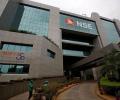
The Securities Appellate Tribunal (SAT) on Thursday quashed the markets regulator Sebi's order imposing a fine of Rs 7 crore on the National Stock Exchange (NSE) in the dark-fibre case. Additionally, the tribunal has set aside a fine of Rs 5 crore levied by Sebi on the exchange's former official Anand Subramanian. Further, it has partly set aside the regulator's order against former MD and CEO of NSE Chitra Ramkrishna, ex-official Ravi Varanasi and a few stock brokers, among others.

Mutual funds (MFs) have significantly increased their ownership across market segments, but the midcap space stands out with comparatively higher growth. Data reveals that the number of midcap companies with over a fifth of MF ownership has doubled from nine in March 2022 to 18 by March 2025. In contrast, largecap stocks saw only a marginal rise, from three to four such companies during the same period.

Promoters of India's top private listed companies have cut their stakes sharply since 2021, taking advantage of elevated valuations and reshaping ownership dynamics in the market. Holdings of promoters in the top 200 privately owned listed firms declined nearly 600 basis points (bps) to 37 per cent at the end of FY25, from 43 per cent in FY21.

From the Sensex firms, Infosys declined by 3.54 per cent. Power Grid, Eternal, HCL Tech, Tata Consultancy Services, Bharti Airtel, IndusInd Bank, NTPC and HDFC Bank were the major laggards. Sun Pharma, Adani Ports, Bajaj Finance, State Bank of India and Tech Mahindra were the gainers.

The National Stock Exchange (NSE) of India is going to indefinitely defer the internal deadline set for extending trading hours, according to sources in the know. The exchange aimed to introduce a three-hour evening session exclusively for index derivatives by March 2024, contingent upon regulatory clearance from the Securities and Exchange Board of India (Sebi). Sources indicate that the market regulator has not provided a favourable indication, dimming optimism surrounding the proposal.

Ramkrishna's exit comes at a time when NSE has been in focus over a new regulatory framework for high frequency trades and co-location facilities, which some believe give undue advantage to some brokers and traders
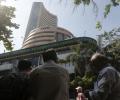
The proposal to merge the Gujarat International Finance Tec-City (GIFT City) units of the National Stock Exchange (NSE) and BSE has reached an advanced stage, and both bourses could file an application before the National Company Law Tribunal as early as this month, according to a top regulatory official. Sources indicate that the merger proposal has received approval from their respective boards. Both the NSE and BSE are arch rivals when it comes to onshore trading.
The National Stock Exchange (NSE) has made a fresh attempt at settling a regulatory investigation into the misuse of Trading Access Point (TAP) software at the bourse. The Securities and Exchange Board of India (Sebi) rejected a similar application in 2022. "NSE and its employees have filed a consolidated settlement application dated May 4, 2023, with Sebi.
The National Stock Exchange (NSE) has received Rs 300 crore from the Securities and Exchange Board of India (Sebi) following relief from the Supreme Court (SC), which is hearing an appeal by the market regulator in the colocation case. The court on March 20 asked Sebi to return Rs 300 crore to the NSE from the Rs 1,107 crore the exchange had deposited as part of the disgorgement in the case. The NSE had given an undertaking that it will return the entire amount to Sebi if the latter wins its appeal before the SC.

'She violated NSE procedures and rules, corporate governance norms; Chitra acted maybe within her capacity as MD and CEO, but not in the right spirit.'
From the Sensex pack, NTPC, Kotak Mahindra Bank, State Bank of India, Tech Mahindra, Power Grid, Bajaj Finserv, Axis Bank, HCL Tech, Reliance Industries and Bajaj Finance were the biggest gainers. Titan, IndusInd Bank, Zomato, Mahindra & Mahindra, Bharti Airtel, Nestle and Infosys were the laggards.

The share of Ahmedabad in the total value of trades on both the BSE and NSE is set to touch double digits for the third year in a row.
From the Sensex firms, Adani Ports, Eternal, Bajaj Finance, Axis Bank, Bajaj Finserv, Reliance Industries, Power Grid and NTPC were the major gainers. Sun Pharma, however, tanked over 5 per cent.
It is the biggest issue we have ever faced in the securities market, where a sensitive and systemically important institution and first-line regulator was not only exploited by unscrupulous elements but functioned like a private fief, points out Debashis Basu.
The National Stock Exchange (NSE) on Thursday warned investors not to fall prey to investment schemes with assured returns offered by Sameer Gulabrao Thite associated with Samsan Unitrade. The exchange pointed out that the person and the entity are not registered either as a member or authorised person of any registered member of the NSE. The cautionary statement comes after the NSE noticed that Sameer Gulabrao Thite associated with Samsan Unitrade was offering the service to handle trading accounts of investors by asking them to share their user identification (user ID) and password.

All the BSE sectoral indices closed in the green. BSE Realty, Auto, Capital Goods and Industrials were lead gainers, jumping up to 5 per cent. IndusInd Bank was the lead gainer among Sensex shares, surging by 6.84 per cent. Tata Motors rallied 4.50 per cent. Larsen & Toubro, Axis Bank, Adani Ports, HDFC Bank, ICICI Bank and HCL Tech were also among the gainers. ITC and Hindustan Unilever were the only laggards.

Among Sensex shares, Zomato, NTPC, Adani Ports, ICICI Bank, State Bank of India, Reliance Industries, Mahindra & Mahindra, Bajaj Finance, Tech Mahindra and Axis Bank were the major laggards. UltraTech Cement and HCL Technologies were the only gainers.
Why self-audit by NSE, why weren't charges probed under your supervision, ministry asks regulator.
The country's largest bourse National Stock Exchange (NSE) has put the NSE Prime initiative in cold storage following lukewarm response from India Inc, said people aware of the development. Inspired by Brazil's Novo Mercado, NSE had announced a separate platform which any listed company could be part of by voluntarily adopting a stricter corporate governance code. Launched in December 2021, NSE Prime was to formally take off within a year after empanelling companies.

The National Stock Exchange (NSE) on Friday warned investors not to fall prey to investment plans with guaranteed returns offered by Suraj Mourya associated with "Aimers Trader". The exchange pointed out that these entities are not registered either as a member or authorised person of any registered member of the NSE. The cautionary statement comes after the NSE noticed that Suraj Mourya associated with Aimers Trader was offering to handle trading accounts of investors by asking them to share their user identification (user ID) and password.

Tata Steel was the biggest loser in the Sensex pack, sliding 8.59 per cent, followed by Tata Motors, Larsen & Toubro, Adani Ports, IndusInd Bank, Tech Mahindra, Reliance Industries, Sun Pharmaceutical, HCL Technologies, Tata Consultancy Services, Infosys, and NTPC, were the major laggards. On the other hand, Bajaj Finance, HDFC Bank, Nestle India, ICICI Bank, ITC, Asian Paints and Axis Bank were among the gainers.
The Securities and Exchange Board of India (Sebi), in a circular dated April 11, 2025, warned investors about rising fraud and manipulation linked to the securities market on social media platforms.

All Sensex firms, except Power Grid, ended in the positive territory. Titan, Bajaj Finance, State Bank of India, Larsen & Toubro, Axis Bank, Bajaj Finserv, Asian Paints and Zomato were the biggest gainers.
The National Stock Exchange (NSE) has withdrawn its decision to change the expiry day for Bank Nifty derivatives contracts from Thursday to Friday. The move follows a "request" from the BSE, which settles its Sensex and Bankex derivatives contracts on Friday. The proposed change in Bank Nifty settlement was scheduled to be effective from July 6 with the first weekly expiry on July 14.
 © 2026 Rediff.com - Advertise with us - Disclaimer - Privacy Policy - Sitemap - Feedback - About us - Terms of use - Grievances